
Introduction
Pregnancy comes with many emotions, questions, and concerns, especially during the final weeks before delivery. One condition that often creates fear among expecting parents is meconium during labour. Many women hear this term for the first time during delivery and immediately worry about the baby’s safety.
Meconium is the baby’s first stool, and in some pregnancies, it may pass into the amniotic fluid before or during labour. While this does not always mean danger, it can sometimes indicate fetal stress and requires careful monitoring. Women experiencing a high risk pregnancy in Hadapsar are often advised to stay alert and maintain regular pregnancy check-ups to reduce complications during labour.
Understanding what meconium means, why it happens, and when medical care becomes important helps expecting mothers stay informed and prepared during childbirth.
What Is Meconium?
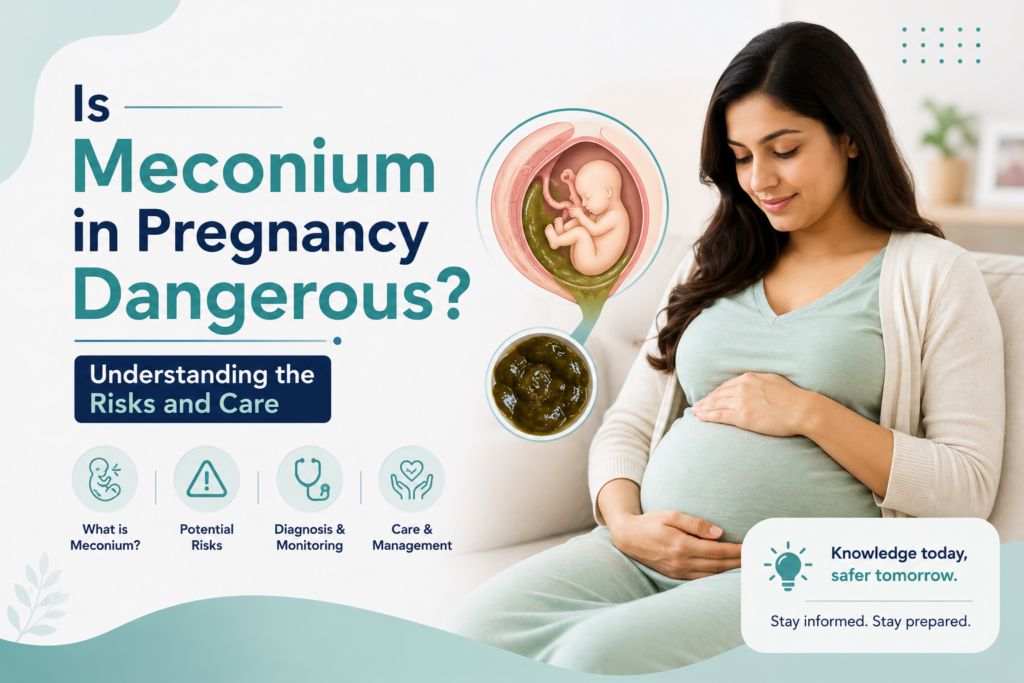
Meconium is a thick, sticky, dark green substance that forms inside the baby’s intestines during pregnancy. Normally, babies pass meconium after birth during the first few days of life.
However, in some pregnancies, the baby may pass meconium before delivery while still inside the womb. This causes the amniotic fluid to become green or brown in color. This condition is called meconium-stained amniotic fluid.
Women under the care of the Best High Risk Pregnancy Doctor in Hadapsar are usually monitored carefully during labour if meconium is detected.
Is Meconium in Pregnancy Dangerous?
Meconium does not always mean there is a serious problem. In many cases, babies are born healthy even when meconium is present.
However, sometimes it may indicate:
- stress during labour
- reduced oxygen supply
- overdue pregnancy
- complications affecting the baby
The biggest concern happens when the baby inhales meconium-stained fluid into the lungs during or before delivery. This condition is known as meconium aspiration syndrome.
Women experiencing a high risk pregnancy in Hadapsar may require closer monitoring because pregnancy complications can increase certain delivery risks.
Why Does Meconium Happen During Labour?
There are several reasons why babies may pass meconium before birth.
Full-Term or Post-Term Pregnancy
Meconium is more common in pregnancies that continue beyond the due date.
Fetal Stress
If the baby experiences stress due to reduced oxygen levels, meconium passage may occur during labour.
Pregnancy Complications
Certain complications may increase the chances of meconium, including:
- high blood pressure
- diabetes
- infections
- placental problems
Difficult Labour
Long or stressful labour may also contribute to fetal distress.
The guidance of the Best High Risk Obstetrics Doctor Near Hadapsar, Pune becomes important in such situations because timely monitoring helps doctors make safer delivery decisions.
Signs That Doctors Monitor During Labour
Meconium is usually identified when the water breaks and the amniotic fluid appears:
- green
- yellow-green
- brownish
Doctors may also monitor:
- fetal heartbeat
- labour progress
- oxygen supply to the baby
Continuous monitoring helps assess whether the baby is tolerating labour safely.
Women receiving care for a high risk pregnancy in Hadapsar are often monitored more closely because complications may develop faster during labour.
What Is Meconium Aspiration Syndrome?
Meconium aspiration syndrome occurs when the baby inhales meconium-stained fluid into the lungs before, during, or immediately after birth.
This may affect breathing and require immediate newborn care.
Symptoms in the Baby May Include:
- breathing difficulty
- rapid breathing
- bluish skin color
- weak crying
- low oxygen levels
Not every baby exposed to meconium develops aspiration syndrome, but newborn monitoring becomes important after delivery.
How Doctors Manage Meconium During Delivery
Modern obstetric care focuses on early detection and timely management of labour complications.
Continuous Fetal Monitoring
Doctors carefully monitor the baby’s heartbeat during labour.
Assessing Labour Progress
If fetal distress is suspected, doctors may recommend quicker delivery.
Delivery Planning
Depending on the condition of mother and baby, doctors decide whether:
- normal delivery is safe
- assisted delivery is required
- emergency C-section becomes necessary
Women often prefer the Best Maternity Hospital in Pune because advanced pregnancy monitoring and emergency care support safer maternal and newborn management.
Does Meconium Always Lead to C-Section?
No. Meconium alone does not always require surgical delivery.
Many women deliver normally even when meconium is present. The decision depends on:
- fetal heartbeat
- labour progression
- oxygen levels
- overall maternal and fetal condition
If the baby remains stable, doctors may continue labour safely under monitoring.
However, if signs of fetal distress appear, immediate intervention may become necessary.
This is why women with a high risk pregnancy in Hadapsar are advised to deliver under proper medical supervision.
How Pregnancy Monitoring Helps Reduce Risks
Regular pregnancy care plays an important role in identifying complications early.
Routine monitoring may include:
- pregnancy scans
- fetal growth evaluation
- blood pressure monitoring
- NST monitoring
- routine investigations
Women guided by the Best High Risk Pregnancy Doctor in Hadapsar are usually educated about warning signs that should never be ignored during late pregnancy.
Warning Signs During Pregnancy That Need Immediate Attention
Seek medical help immediately if you notice:
- reduced baby movement
- bleeding
- severe abdominal pain
- water leakage with green fluid
- high fever
- severe swelling
- persistent headache
Early medical attention helps reduce complications and improves safety for both mother and baby.
Emotional Stress During Labour
Hearing terms like “meconium” during labour can create panic among family members. However, understanding the condition properly helps reduce fear.
Modern labour monitoring and neonatal care help doctors manage most cases safely when identified early.
The support of the Best High Risk Obstetrics Doctor Near Hadapsar, Pune helps expecting mothers feel more informed and reassured throughout labour and delivery.
Importance of Choosing Proper Pregnancy Care
Pregnancy complications can sometimes develop unexpectedly, even in healthy pregnancies.
Choosing experienced medical supervision helps ensure:
- regular monitoring
- timely diagnosis
- emergency support
- safer labour management
Many families choose the Best Maternity Hospital in Pune because structured pregnancy care and emergency readiness improve overall maternal and newborn safety.
Conclusion
Meconium during labour does not always mean danger, but it should never be ignored. In some situations, it may indicate fetal stress and require immediate monitoring and medical care. Early detection and proper labour management help reduce complications and support safer childbirth outcomes.
Women experiencing a high risk pregnancy in Hadapsar should remain alert during the final weeks of pregnancy and avoid delaying hospital visits if unusual symptoms appear.
Regular pregnancy check-ups, timely monitoring, and proper medical guidance help doctors manage labour safely and provide better care for both mother and baby.
FAQs
What is meconium in pregnancy?
Meconium is the baby’s first stool. Sometimes it passes into the amniotic fluid before delivery.
Is meconium always dangerous?
No. Many babies remain healthy even when meconium is present, but proper monitoring is important.
What causes meconium during labour?
It may occur due to full-term pregnancy, fetal stress, difficult labour, or certain pregnancy complications.
Can meconium lead to breathing problems in babies?
Yes. In some cases, babies may inhale meconium-stained fluid, causing breathing difficulty known as meconium aspiration syndrome.
Does meconium always require C-section delivery?
No. The delivery method depends on the condition of the mother and baby during labour.
